Arctic Ocean 2050, Norway's largest research program, has started. The funding from the Research Council was recently granted. – We have just hired Paul Renaud as program director, says Jørgen Berge, chairman of the board of Arctic Ocean 2050. This summer the first research cruise will be several weeks in the Arctic Ocean.
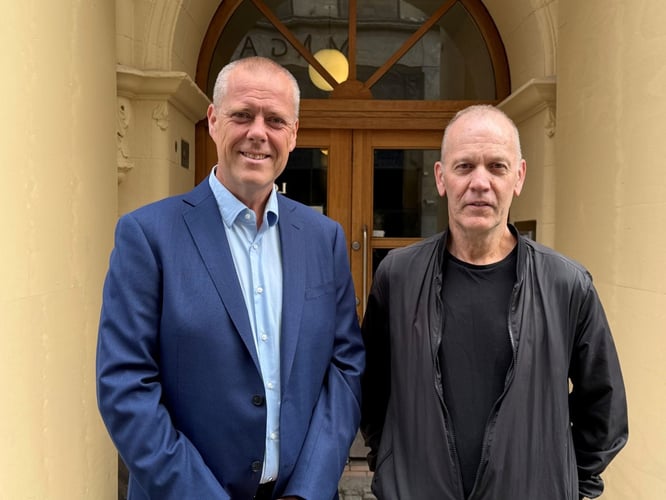
We have met Jørgen Berge, Pro-Rector for Research and Innovation at UiT The Arctic University of Norway and Chairman of the Board of Arctic Ocean 2050. UiT plays a central and coordinating role in the large ten-year research program that brings together 18 Norwegian research institutions with the aim of generating more knowledge about the consequences of the Arctic Ocean becoming ice-free in the summer.
Why is it important that Norway finances Arctic Ocean 2050?
The short explanation is the enormous change that is now taking place in the Arctic Ocean. It is a transformation from an icy, white sea to an open and blue sea, at least in the summer. No modern human has ever observed such a change. The last time it happened Neanderthals were the most dominant human species on this planet. It is a change that is enormous and that is happening in our backyard. This is something that affects us and something that it is right that Norway takes a lead in. We will do this through Arctic Ocean 2050.
Arctic Ocean 2050 is linked to the 5th International Polar Year (IPY-5) to support and substantiate that this is not just a Norwegian program. We want to develop Arctic Ocean 2050 to include major international participation. We need large, broad international cooperation to be able to work with this polar mediterranean sea that lies between external land masses.
We cannot look at this in isolation from our sector. We need a broader perspective. That is important both because this is happening now and because the changes that are taking place are dramatic, but also important because this is happening in an international perspective and we as a polar nation must take the lead. We must take responsibility for this. We are now doing that and I am very pleased about it.
What knowledge do you expect to produce that is important for the management of the Arctic Ocean?
We expect to bring about a comprehensive understanding of a system that is changing. We have made a science plan where we look at the whole picture. It is the whole picture that is important. Understanding ice melting, not only at sea, but also in surrounding land areas and glaciers, and how this affects the ocean. We have to assume that there will be increased human activity in the Arctic Ocean and look at how this affects this system. That will set requirements to the management of the area. The answer to this is mostly in the holistic and integrated understanding of the Arctic Ocean in isolation, but also the Arctic Ocean as a global hub for ocean currents and temperature regulation.
What are you doing to ensure that all 18 institutions are well involved in the research?
We have had several open meetings to go out as a consortium and to facilitate for the various institutions to have their processes internally. As of now, more than 400 researchers at 18 Norwegian institutions are involved. It is a great challenge to integrate so many institutions with different interests and opinions and with so many researchers involved.
We have recently hired Paul Renaud as program director. He is an internationally recognized Arctic marine ecologist with long experience from Svalbard. Paul has been involved from the start and has been involved in writing the science plan. He knows the whole program very well.
What are the plans for international involvement in the program?
The program is funded with one billion from The Research Council of Norway and with one billion in own-contribution from the 18 institutions. These funds will go to the Norwegian part of Arctic Ocean 2050. But we must have a broad international team in place and we are completely dependent on that other nations now connect to the program and think of Arctic Ocean 2050 as an instrument and as a means towards and in through the 5th International Polar Year (IPY-5).
We are in contact with countries such as Canada, the United States, Great Britain, Germany and Italy. We use the opportunities we have to highlight Arctic Ocean 2050 as an initiative. The feedback we receive is unequivocally positive. Other nations look to Norway and to the fact that we have taken leadership. They want to connect. There are a number of nations that see that this is important. Over the next two years, I believe we will establish a broad international coalition for a joint project under the umbrella Arctic Ocean.